When Different Tools Arrive at the Same Biological Truth
Imagine optimizing cellular energy without stimulants, without crashing, without forcing your biology beyond its natural capacity.
What if the most effective interventions weren't the ones that pushed harder, but the ones that removed resistance?
This is the case with methylene blue and red light therapy, two tools that emerge from entirely different worlds (one a compound, the other light), yet arrive at the same biological conversation: mitochondrial efficiency.
Not stimulation. Not override. Support.
The Convergence Point: Mitochondria
Your mitochondria produce 90% of cellular ATP (adenosine triphosphate), the currency your cells use for every function, from muscle contraction to neurotransmitter synthesis.
When mitochondrial efficiency declines, through aging, oxidative stress, environmental toxins, or chronic stress, energy production suffers at every level: cognitive fog, physical fatigue, slower recovery, and impaired resilience.
Methylene blue and red light therapy both target the same bottleneck: the electron transport chain (ETC), where ATP is generated. They just arrive there differently.
Methylene Blue: The Internal Electron Shuttle
What It Is
Methylene blue (MB) is a synthetic compound originally used as a dye and antimalarial, now recognized for its mitochondrial support properties at low doses (0.5–4mg/kg bodyweight).
At the cellular level, methylene blue acts as an alternative electron carrier within the mitochondrial electron transport chain.
The Mechanism
In the conventional pathway, electrons move through Complex I → Complex III → Complex IV → ATP production. The inefficiency here is that electron "leakage" creates reactive oxygen species (ROS), damaging mitochondria over time.
With methylene blue, MB accepts electrons from Complex I and III (where most leakage occurs) and transfers them directly to Complex IV. The result: bypassed bottlenecks, reduced ROS production, and increased ATP efficiency.
In plain terms, your mitochondria produce more energy with less oxidative damage.
What This Means for Biohackers
Measurable outcomes include enhanced cognitive clarity (especially under mental load), improved cellular resilience during stress, support for neuroprotection (MB crosses the blood-brain barrier), and reduced oxidative stress markers.
MB doesn't stimulate, it optimizes existing pathways. It's the difference between flooring the gas pedal (stimulants) and tuning the engine (efficiency).
Red Light Therapy: Energy Delivered as Frequency
What It Is
Red light therapy (RLT), also called photobiomodulation (PBM), uses specific wavelengths of red (630–680nm) and near-infrared (800–850nm) light to interact with cellular photoreceptors.
Unlike UV light (which damages) or visible light (which doesn't penetrate deeply), red/NIR wavelengths are absorbed by mitochondrial enzymes, particularly cytochrome c oxidase (Complex IV).
The Mechanism
Red and NIR photons penetrate skin up to 5–10mm depth depending on wavelength, where they're absorbed by cytochrome c oxidase in mitochondrial Complex IV. This releases nitric oxide (NO) that was blocking the enzyme, resulting in increased oxygen utilization and enhanced ATP production.
Secondary effects include increased mitochondrial membrane potential, reduced oxidative stress, enhanced cellular signaling (calcium, reactive oxygen species as signals rather than damage), and improved blood flow via NO release.
In plain terms, cells produce energy more efficiently, with less resistance.
What This Means for Biohackers
Measurable outcomes include accelerated muscle recovery (reduced DOMS), enhanced tissue repair through collagen synthesis, improved inflammation resolution (not suppression), cognitive support when applied to the skull/forehead area, and sleep quality improvements when used in the evening.
RLT enhances existing mitochondrial function through light signaling, no drugs, no external compounds.
Where They Meet: The Electron Transport Chain
Both tools target the same biological system, but from different angles.
Methylene blue enters internally as an ingested compound, acting as an electron shuttle that bypasses Complex I/III leakage. The result is increased ATP efficiency and reduced ROS.
Red light therapy enters externally as absorbed photons, enhancing Complex IV activity and releasing nitric oxide. The result is increased oxygen utilization and improved ATP production.
The convergence: both improve mitochondrial efficiency without forcing biology beyond its capacity. This is systems-level optimization, supporting the foundation rather than chasing downstream symptoms.
The Plant TEK Lens: Why Efficiency Matters More Than Stimulation
At Fractal Forest, we frame optimization through Plant TEK methodology: working with biological systems, not against them.
The Problem with Stimulation-Based Approaches
Stimulants like caffeine and synthetic pre-workouts force the nervous system to release stored energy, deplete reserves over time, create tolerance and dependence, and don't address underlying mitochondrial function.
Efficiency-based approaches like MB and RLT support the source of energy production (mitochondria), build no tolerance, compound over time (better mitochondria = better everything), and address root cause rather than symptoms.
The difference comes down to this:
Stimulation asks: "How can we push harder?"
Efficiency asks: "How can we remove resistance?"
Why This Philosophy Aligns with Plant Intelligence
Plants don't "force" growth, they optimize conditions (light, water, nutrients) and express their genetic potential. Your biology works the same way.
Methylene blue and red light therapy are inputs that optimize conditions for cellular energy, allowing your mitochondria to express their function more completely. This is reconnection, not override.
Practical Application: Protocols for Biohackers
Methylene Blue Protocol
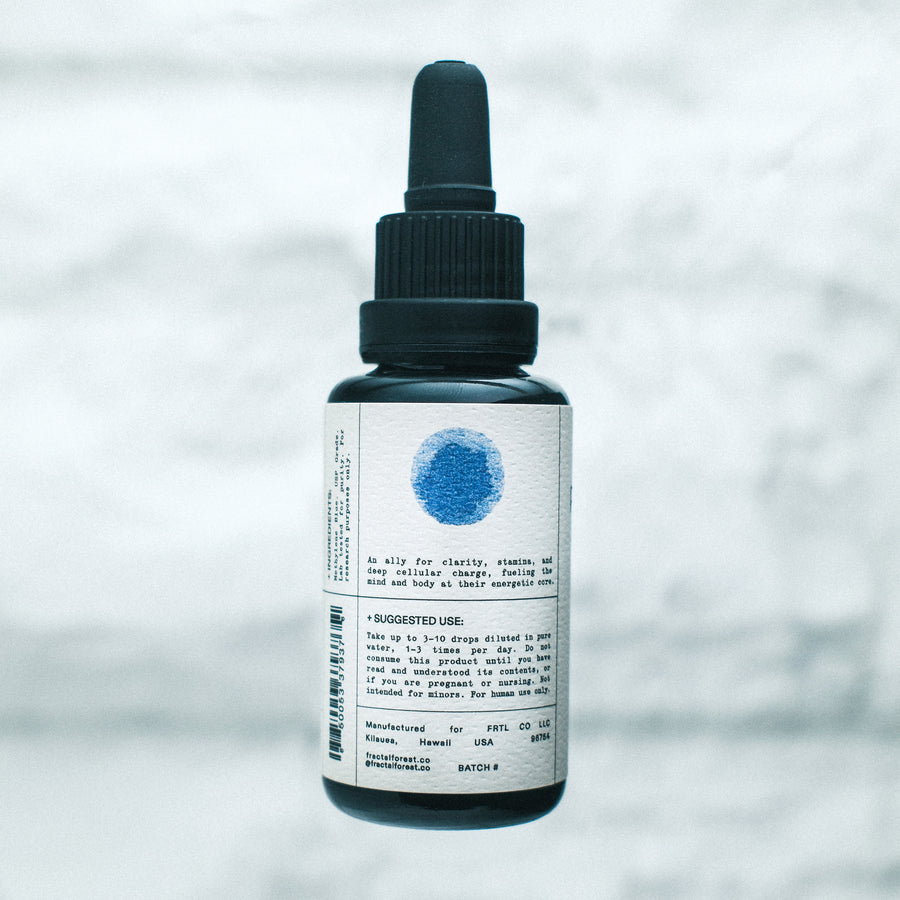
Dosing: Start low at 0.5mg/kg bodyweight (e.g., 35mg for a 70kg person). Standard dose is 1–2mg/kg bodyweight, with an upper limit of 4mg/kg, higher doses can have opposite effects.
Timing: Morning or early afternoon is ideal since it can be alerting for some individuals. Avoid evening dosing if you're sensitive, as it may affect sleep.
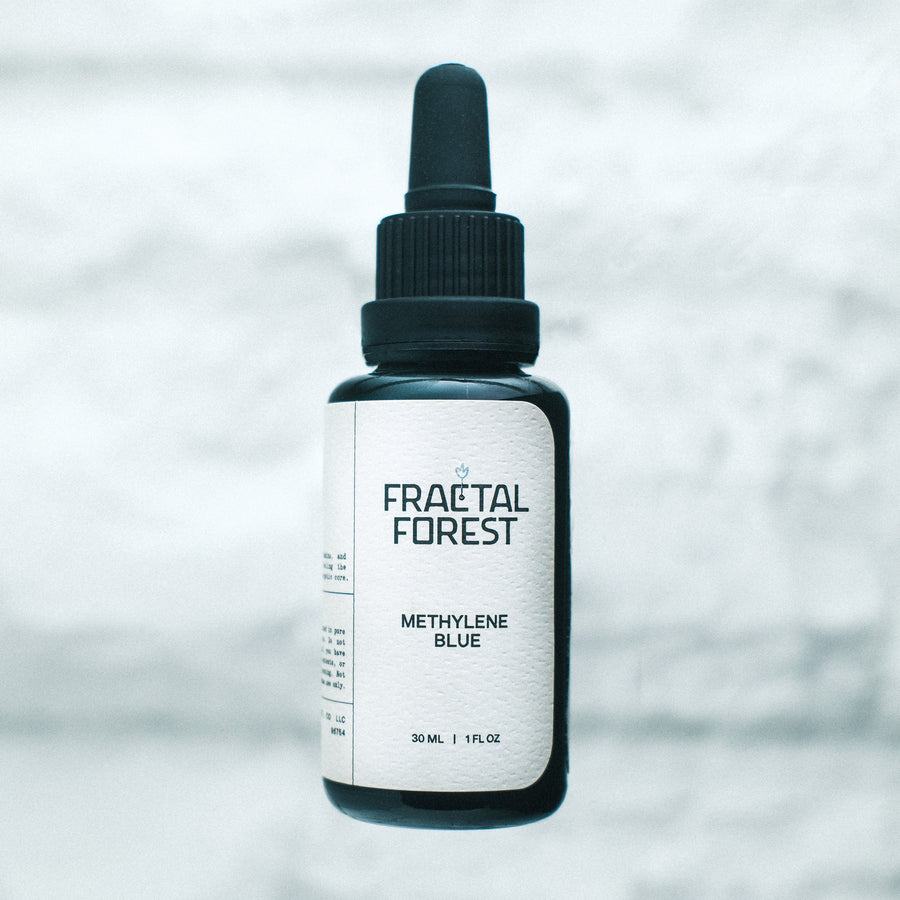
Form: Always use pharmaceutical-grade USP methylene blue, not industrial dye. Fractal Forest Methylene Blue offers 10mg per drop for easy sublingual dosing.
What to track: Cognitive clarity on a subjective 1–10 scale, mental endurance under load (work tasks, problem-solving), and recovery from mental fatigue.
Duration: Daily use is safe for long-term with no tolerance observed. Some biohackers cycle 5 days on, 2 days off for baseline comparison, but this is optional.
Contraindications: Do NOT combine with SSRIs or MAOIs (serotonin syndrome risk). Avoid if G6PD deficient. Consult your healthcare provider if on medications.
Red Light Therapy Protocol
Wavelengths: Red (630–680nm) is best for surface tissues, skin, and inflammation. Near-infrared (800–850nm) offers deeper penetration for muscles, joints, and brain.
Dosing (measured in J/cm²): General use calls for 10–20 J/cm² per session, recovery and performance protocols call for 20–40 J/cm², and cognitive applications (forehead/skull) call for 10–20 J/cm².
Distance and duration: Position 6–12 inches from the light source for 10–20 minutes per session depending on device power. To calculate dosage: (Power in mW/cm² × Time in seconds) / 1000 = J/cm².
Timing: Morning sessions support energy and cognition. Post-workout sessions support recovery and inflammation modulation. Evening sessions support sleep (use red-only, avoid blue light).
Frequency: Daily or every other day, consistency matters more than intensity. Minimum 3–4x per week for measurable benefits.
Target areas: Forehead and skull for cognitive support and neuroprotection. Torso and back for systemic mitochondrial support. Specific muscles and joints for targeted recovery.
What to track: HRV (heart rate variability) should increase over 4–6 weeks. Monitor recovery time by tracking DOMS duration and soreness intensity. Sleep quality can be measured subjectively or through Oura/WHOOP data. Track performance metrics like strength, endurance, and cognitive endurance.
Stacking Protocol: MB + RLT
Why stack: The mechanisms are synergistic, internal electron support combined with external photon enhancement. Different bottlenecks are addressed since MB bypasses Complex I/III while RLT enhances Complex IV. Timing is complementary: MB in the morning, RLT post-workout or in the evening.
Sample stack:
- Morning: 1–2mg/kg methylene blue (sublingual or in water)
- Post-workout: 15–20 min red/NIR light therapy targeted to muscles trained
- Evening (optional): 10–15 min red light therapy (forehead for cognitive support, or full-body for systemic benefit)
Timeline expectations: Weeks 1–2 bring subtle cognitive clarity and less afternoon fog. Weeks 3–4 bring noticeable recovery improvements and reduced DOMS. Weeks 6–8 bring HRV increases (5–15 points is common) and sustained energy throughout the day. By month 3 and beyond, expect cumulative mitochondrial optimization and resilience under stress.
Why This Alignment Matters
We don't believe the body needs to be pushed into performance. It needs the right conditions to express it.
When tools respect biological rhythms, work with existing systems, and support fundamental processes like cellular energy, they compound rather than compete.
The Fractal Forest Approach
Not hacks. Inputs.
Fractal Forest Methylene Blue is pharmaceutical-grade with precise dosing (10mg per drop), third-party tested. For red light therapy, we recommend partnering with quality devices in the 630–680nm and 800–850nm wavelength range.
Both tools reflect the same philosophy: supporting energy production at its source, rather than chasing symptoms downstream.
Less stimulation. More efficiency.
Common Questions
Can I use methylene blue every day?
Yes. No tolerance has been observed with daily use at standard doses (0.5–2mg/kg). Some biohackers cycle 5 days on, 2 off to maintain baseline awareness, but it's not required.
Does red light therapy work through clothes?
No. Light must contact skin directly. Wavelengths are absorbed and blocked by fabric.
How long until I notice results?
Methylene blue produces acute cognitive effects within 30–90 minutes, with sustained improvements over 1–2 weeks. Red light therapy shows recovery improvements within 2–4 weeks, with systemic benefits like HRV gains appearing over 6–8 weeks. Consistency is critical, sporadic use yields minimal benefit.
Can I combine with other mitochondrial support?
Yes. Synergistic combinations include CoQ10 (an electron carrier in the ETC, 100–200mg/day), Shilajit (fulvic acid enhances mitochondrial ATP synthesis), NAD+ precursors like NMN or NR to support mitochondrial NAD+ levels, and magnesium, which is required for ATP production and most people are deficient in.
One important caution: do not stack methylene blue with SSRIs or MAOIs due to serotonin syndrome risk.
Is this just biohacking hype?
No. Both have clinical research backing. Methylene blue has been studied for neuroprotection, cognitive enhancement, and mitochondrial support with over 100 years of medical use. Red light therapy has 3,000+ studies on PubMed, NASA research on wound healing, and widespread clinical use. These aren't trends, they're tools with established mechanisms.
The Bottom Line
Energy isn't something to manufacture through stimulation and depletion. It's something to protect, optimize, and support at the source.
Methylene blue and red light therapy belong in the same conversation because they address the same biological reality: mitochondrial efficiency determines everything. Not as hacks, but as supportive inputs for the fundamental process that powers every cell in your body.
Next Steps
If You're New to Mitochondrial Optimization
Start here: Fractal Forest Methylene Blue
It's the easiest entry point with simple dosing (1–2 drops daily), immediate subtle effects on cognitive clarity, no equipment needed (unlike RLT), and pharmaceutical-grade, third-party tested quality.
Protocol: 1–2mg/kg bodyweight, morning, and track cognitive clarity for 2 weeks.
If You're Optimizing Performance
Stack Methylene Blue with a red light therapy device. The synergistic mechanisms (internal + external mitochondrial support) deliver measurable performance improvements in HRV, recovery time, and endurance, addressing multiple bottlenecks in energy production.
Protocol: MB in the morning, RLT post-workout, and track HRV and recovery metrics.
If You're Building Complete Mitochondrial Support
Full stack: Methylene Blue for electron transport optimization, Himalayan Shilajit for fulvic acid ATP enhancement (14–18% increase), red light therapy for photobiomodulation, and CoQ10 supplementation for electron carrier support.
This addresses mitochondrial function from multiple angles, with clinical evidence for each component, and compounds over 8–12 weeks.
Protocol: Consult our Herbal Consultation for a personalized mitochondrial optimization protocol.
References
- Rojas JC, et al. "Neuroprotective effects of near-infrared light in an in vivo model of mitochondrial optic neuropathy." Journal of Neuroscience 2008.
- Tucker LD, et al. "Methylene blue for the treatment of septic shock." Critical Care Medicine 2003.
- Karu TI. "Multiple roles of cytochrome c oxidase in mammalian cells under action of red and IR-A radiation." IUBMB Life 2010.
- Gonzalez-Lima F, Barksdale BR, Rojas JC. "Mitochondrial respiration as a target for neuroprotection and cognitive enhancement." Biochemical Pharmacology 2014.
- Hamblin MR. "Mechanisms and applications of the anti-inflammatory effects of photobiomodulation." AIMS Biophysics 2017.